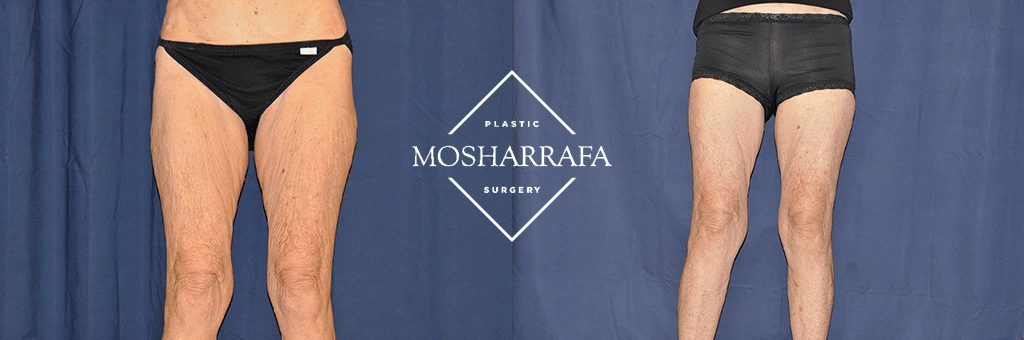
Ideal candidates for thigh lift procedures have loose, excess skin on the thighs but are not obese. Most often, thigh lifts are performed after substantial weight loss.
If you struggle with thighs that do not respond to diet and exercise, a surgical thigh lift may help you achieve the contours and lower body profile you have been working towards.
My whole experience was wonderful. Everyone was very accommodating and kind. – A.W.
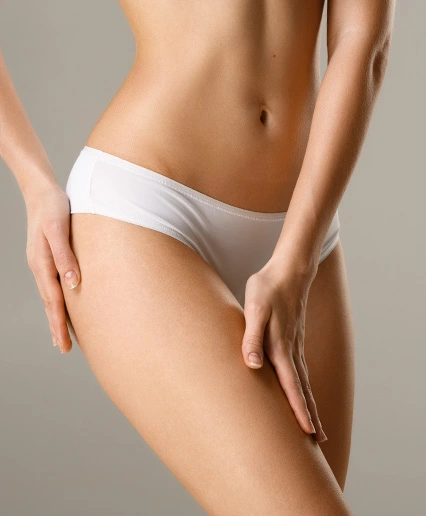
This results in smoother skin that produces visible contours on the thighs. Liposuction on the surrounding areas like the hips or abdomen can help improve the overall contours of the thighs. There are generally two types of techniques that can be used for a thigh lift, and your plastic surgeon will determine the right one for you during a consultation.
During the first week of recovery, you can greatly help the process by resting and avoiding heavy activity. Elastic compression garments should be worn for several weeks to support the tissues as they heal. After two weeks, you can generally return to non-strenuous activities and may be able to go back to work. You can gradually increase your activities under your plastic surgeon’s supervision, adding in driving and low-impact exercise at approximately four weeks. It may take up to six weeks to fully resume your normal activities. Your final results will gradually emerge in the months after your procedure as swelling continues to go down and your contours refine.
There is a technique of lower body lift called a high lateral tension procedure that does improve the outer thighs.