
Fleur-de-Lis Tummy Tuck
in Phoenix, AZ

At Mosharrafa Plastic Surgery in Phoenix, the fleur-de-lis tummy tuck is designed for patients who need more than a traditional abdominoplasty can deliver – vertical and horizontal skin tightening in a single, transformative procedure.

If significant weight loss, pregnancy, or aging has left loose skin that hangs both downward and outward, this advanced technique reshapes your midsection from every direction so your figure finally reflects the work you’ve put in.

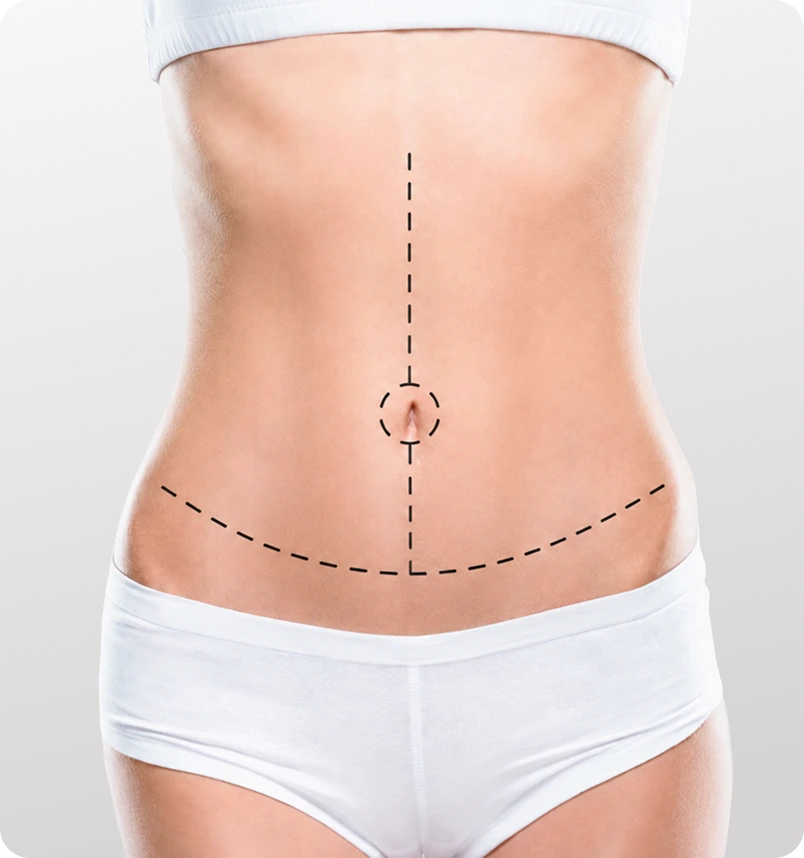
Patient's abdomen showing results of fleur de lis tummy tuck procedure

What Is a Fleur-de-Lis Tummy Tuck?

A fleur-de-lis tummy tuck is an advanced form of abdominoplasty that uses two incisions – one horizontal along the lower abdomen and one vertical running from the sternum toward the pubic area – to remove excess skin in both directions.

Standard tummy tucks pull skin downward, which works beautifully when laxity is limited to the front of the abdomen. When skin also hangs loosely from side to side – a common result of major weight loss – the vertical component allows our surgeons to bring the abdominal wall inward, cinching the waist and creating definition a horizontal-only approach cannot achieve.

This procedure delivers comprehensive abdominal reconstruction, addressing several concerns at once:

  • Excess skin across the front and sides of the abdomen
  • Overhanging skin (pannus) that folds over the waistline or pubic area
  • Separated or weakened abdominal muscles (diastasis recti) following pregnancy or weight fluctuation
  • Residual fat deposits that resist diet and exercise
  • Skin irritation, rashes, and chafing caused by persistent skin folds
  • Loss of waist definition where the torso appears boxy or straight-sided

It is frequently the procedure of choice for post-bariatric patients, individuals who have lost 75 pounds or more through lifestyle change or GLP-1 medications, and patients whose skin elasticity is beyond what a standard tummy tuck can correct.

Preparing for Fleur-de-Lis Surgery

Preparation is where good outcomes begin. The weeks leading up to surgery matter as much as the operation itself, and our team guides you through every step.

Your journey starts with an in-depth consultation at our Phoenix office, where your surgeon will:

  • Review your full medical history, weight loss history, and any prior abdominal surgeries
  • Perform a physical examination assessing skin quality, fat distribution, and muscle separation
  • Discuss your goals and explain realistically what surgery can and cannot achieve
  • Explain scar placement and show you where incisions will fall
  • Recommend whether a standard, mini, or fleur-de-lis approach is the better fit
  • Review anesthesia, surgical facility, recovery timeline, and cost

We may also use VECTRA 3D imaging to help you visualize proposed changes, and we’ll coordinate any medical clearance needed from your primary physician. You’ll leave with written instructions and an open line of communication – no rushed decisions, no pressure.

  • Stop all nicotine at least four to six weeks prior – smoking dramatically impairs healing and raises complication risk
  • Discontinue certain medications and supplements, including aspirin, NSAIDs, vitamin E, and fish oil, per your surgeon’s guidance
  • Maintain a stable weight for at least three to six months and follow a healthy diet
  • Optimize nutrition with adequate protein and correct any vitamin deficiencies – especially important after bariatric surgery
  • Arrange support at home for the first one to two weeks, including transportation and help with children and pets
  • Prepare your recovery space with loose clothing, pillows for propping, easy-reach essentials, and prepared meals
  • Complete lab work and imaging as directed
  • Fast as instructed the night before your procedure

Fleur-de-Lis Procedure Steps

Before surgery begins, your surgeon carefully marks your abdomen while you’re standing. These markings identify the areas of excess skin to be removed, the planned incision locations, and the new position of your belly button. Planning the procedure while you’re upright allows your surgeon to account for how the tissues naturally sit under gravity and helps achieve the most balanced result.
A fleur-de-lis tummy tuck is performed under general anesthesia, so you’ll be completely asleep and comfortable throughout the procedure. Your vital signs are continuously monitored by an anesthesia professional to ensure your safety from the beginning of surgery until you wake up.
Once you’re asleep, your surgeon creates two carefully planned incisions. The first is a low horizontal incision that extends across the lower abdomen and is positioned so it can usually be concealed beneath underwear or swimwear. The second is a vertical incision that runs up the center of the abdomen from the pubic area, allowing excess skin to be removed from side to side as well as from top to bottom. If you already have a suitable vertical abdominal scar, it can often be incorporated into the new incision.
After lifting the skin and underlying tissue, your surgeon examines the abdominal muscles. If the muscles have separated due to pregnancy or weight changes (diastasis recti), they are brought back together with strong internal sutures. Repairing the muscles helps create a flatter abdomen, improves core support, and can enhance waist definition.
The defining feature of the fleur-de-lis technique is the removal of excess skin in two directions. Skin is excised both vertically and horizontally, making it possible to treat significant skin laxity that a traditional tummy tuck cannot fully address. This approach is particularly beneficial for patients who have lost a substantial amount of weight and have loose skin across the entire abdomen.
If needed, liposuction may be performed at the same time to improve the overall shape of the abdomen and waist. It is commonly used to reduce stubborn fat around the flanks or upper abdomen, creating smoother transitions and enhancing the final contour without replacing the skin-tightening portion of the procedure.
Once the abdominal contour has been reshaped, the remaining skin is redraped over the abdomen and closed in several layers. Layered closure reduces tension on the skin, which supports healing and may improve the appearance of the scars. The belly button is brought through a new opening in the skin and positioned to look as natural as possible.
Before the procedure is complete, your surgeon may place temporary drains to reduce fluid build-up beneath the skin. Dressings are applied, and you’ll be fitted with a compression garment to help minimize swelling and support the healing tissues.
Person displaying a toned, flat abdomen after fleur de lis tummy tuck procedure

Recovery After Surgery

Recovery is a process measured in weeks and months, not days. Knowing what to expect makes it far easier.

For the first several days, expect tightness, swelling, bruising, and soreness – particularly if muscle repair was performed. You’ll be encouraged to walk short distances the very first day to reduce clot risk, while remaining slightly bent at the waist to avoid tension on the incisions.
Your instructions cover drain care and output logging, compression garment wear, incision care, medication schedules, and activity limits. Drains typically come out within one to two weeks, and your first follow-up is usually within the first week.

  • Week 1–2: Peak swelling and discomfort; short, frequent walks; no lifting
  • Week 3–4: Noticeably improved mobility; return to light daily routines; often back to desk work
  • Week 6: Most restrictions lifted; gradual return to exercise with surgeon clearance
  • Month 3: Swelling substantially resolved; contour becoming clear
  • Month 6–12: Final results settle; scars continue lightening and flattening

Healing varies by individual. Patience during the middle months is one of the most valuable things you can bring to your recovery.

Discomfort is managed with prescribed medication, tapering to over-the-counter options within days for most patients. Compression garments help control swelling and support tissues.

For scars, we recommend consistent sun protection, silicone sheets or gels once incisions are fully closed, gentle massage when cleared, and good nutrition and hydration. Consistent follow-up appointments monitor your progress and address any concerns.

Person's abdomen showing excess skin and tissue, hands demonstrating the area addressed by fleur de lis tummy tuck

Ideal Candidates for This Procedure

You may be a strong candidate for a fleur-de-lis abdominoplasty if you:

  • Have lost a large amount of weight and are now within 10–15 pounds of a stable goal weight
  • Carry loose abdominal skin that extends around the sides, not just in front
  • Experience skin folds that cause hygiene difficulty, rashes, or chafing
  • Have weakened or separated abdominal muscles
  • Are a non-smoker, or are willing to stop well before surgery
  • Are in generally good health with well-managed medical conditions
  • Hold realistic expectations and understand the vertical scar is permanent

Patients still actively losing weight, planning future pregnancies, or managing uncontrolled conditions such as diabetes or heart disease are typically advised to wait. Our team will always tell you honestly if the timing isn’t right yet.

Benefits of a Fleur-de-Lis Tummy Tuck

For the right candidate, a fleur-de-lis tummy tuck can provide life-changing improvements that extend beyond appearance. By removing excess skin in both the vertical and horizontal directions, this technique creates a smoother abdominal contour while restoring proportions that may have been impossible to achieve through diet and exercise alone.
  • Removal of large amounts of loose abdominal skin
  • Improved waist definition and a narrower-looking midsection
  • A flatter abdomen through muscle repair and skin tightening
  • Relief from skin irritation, rashes, and chafing caused by skin folds
  • Better fit and comfort in clothing
  • Enhanced posture and core support when abdominal muscles are repaired
  • Increased confidence and comfort with your appearance

While the results are long-lasting, maintaining a stable weight and healthy lifestyle is essential to preserving your outcome. Your surgeon will discuss what you can realistically expect based on your anatomy, skin quality, and goals.

Cost of a Fleur-de-Lis Tummy Tuck in Phoenix & , AZ

A fleur-de-lis tummy tuck in the Phoenix area generally ranges from $10,000 to $20,000. Because this is a more involved procedure than a standard abdominoplasty, pricing sits above the traditional tummy tuck range. Please note that our practice does not accept insurance for cosmetic procedures.

Factors Influencing Price

  • Surgical complexity – how much skin and fat must be removed and whether muscle repair is included
  • Operating time and surgeon fees
  • Anesthesia professional fees
  • Accredited surgical facility charges
  • Combined procedures, such as liposuction, breast surgery, or Renuvion
  • Post-operative care including garments, medications, drains, and follow-up visits
Combining procedures in one session often reduces total cost compared to staging them separately, since facility and anesthesia fees are shared.

Financing Options

Our patient coordinators walk you through the full breakdown of costs at consultation with complete transparency – no surprises later. We accept various payment methods and can discuss payment arrangements and detailed cost estimates during your personalized consultation.

Our Approach to
Fleur-de-Lis Tummy
Tuck Surgery

Complex body contouring after major weight loss demands surgical judgment, not just technique.

  • Experienced plastic surgeons. Our surgical team includes Dr. Ali Mosharrafa, Dr. Tamir Mosharrafa, and Dr. Martin Benjamin – all practicing at our Phoenix location.
  • A dedicated body contouring focus. Fleur-de-lis abdominoplasty, belt lipectomy, lower body lift, arm lift, thigh lift, and 360-degree liposuction – the full range of post-weight-loss reconstruction.
  • VECTRA 3D imaging technology. Visualize your potential outcome before you commit, so expectations align from day one.
  • Honest recommendations. If a standard or mini tummy tuck would serve you better, we’ll say so. If you should wait six months to stabilize your weight, we’ll tell you that too.
  • Complete scar management. Laser scar treatment, scar revision, and keloid scar revision available in-house.
  • Comprehensive combination planning. Pair your abdominoplasty with breast surgery, liposuction, or a full mommy makeover to reduce total recovery time.
  • Meticulous, personalized care. Patient safety, advanced techniques, and compassionate support from consultation through complete recovery.
Surgical operating room with overhead lights, sterile table, anesthesia equipment, and supply stations at Mosharrafa's Phoenix location

Frequently Asked Questions (FAQs)

It is permanent and visible, running up the center of the abdomen in a T-shaped pattern with the horizontal incision. Scars are red or pink initially and fade to a lighter, flatter line over 12 to 18 months. Incisions are placed to be discreetly covered by clothing where possible, and laser treatments can further refine appearance.
Our practice does not accept insurance for these cosmetic procedures. In some cases, functional issues such as severe rashes or infections caused by excess skin may be considered reconstructive by a carrier – we recommend checking directly with your insurance provider and discussing your situation with our team.
Yes. Existing C-section scars are typically incorporated into or revised as part of the horizontal incision, often improving their appearance.
Most patients take one to two weeks off from desk-based work and longer – often 2 to 4 weeks – for physical occupations. Your surgeon will provide a personalized timeline.
Walking begins immediately to promote circulation. Light activity resumes around three to four weeks, and most patients return to full exercise, heavy lifting, and core work at six to eight weeks with surgeon clearance.
Most surgeons recommend waiting until your weight has been stable for at least six months – often 12 to 18 months after bariatric surgery – with nutritional status optimized.
Yes. Liposuction, breast lift, breast augmentation, and arm or thigh lifts are commonly combined, though your surgeon will assess whether combining is safe based on total operative time and your health.

Ready to See the Body You've Worked For?

You’ve already done the hardest part. Let our team help you finish the transformation.
