

Even with the best techniques and talents, there are always risks that come with surgeries like breast augmentation. One of the most common complications of breast augmentation is capsular contracture, which can negatively affect your results and health. In this case, a secondary procedure to correct and replace your implants can be beneficial.


Breast implant-associated anaplastic large cell lymphoma (BIA-ALCL) is a rare type of lymphoma linked primarily to textured breast implants. When diagnosed early, it is highly treatable, often through implant removal and capsulectomy. Monitoring symptoms and seeking timely evaluation are key to ensuring patient safety.

During your initial consultation, our surgeon will take the time to understand your physical symptoms, review your medical history, and discuss any concerns related to your breast implants. This visit is also an opportunity to talk openly about your personal preferences and what changes you hope to achieve. By aligning your patient’s goals with clinical findings, our surgeon can recommend the most appropriate and personalized treatment plan.

Vectra 3D imaging shows realistic previews of different implant sizes and shapes on your own body, helping you choose the look that feels right and move into surgery with confidence.

Your recovery from this procedure will be similar to your recovery from breast augmentation or reconstruction. Your plastic surgeon will ensure you know what to expect and may also provide specific steps to help prevent capsular contracture in the future. This might include prescribed medications or massages. You can expect to take one or two weeks away from regular activities to rest and recover. Recovery Timeline
PATIENT REVIEWS
“Absolutely the best” ...


It is important to note that not every woman who experiences capsular contracture will require corrective surgery. There are four different grades of capsular contracture, called Baker Grade I-IV.
Women who experience complications with their breast augmentation or breast reconstruction results can benefit from a removal or exchange procedure with capsulectomy techniques. Depending on the grade of capsular contracture, the implants can become displaced by a capsule of scar tissue that forms around one or both. This can feel hard or even painful. Breast implant removal or exchange can be an effective way to correct your results and relieve capsular contracture.
The benefits of this procedure include:
Each woman is unique in her results after breast augmentation or reconstruction, so a breast implant removal or exchange will be tailored to your specific situation and complications.
At Mosharrafa Plastic Surgery, we offer professional techniques in treating implant complications. During a consultation with our board-certified plastic surgeons, we can discuss your best options for achieving your ideal results and finding relief from complications. To meet with us and learn more, contact our Phoenix office by calling or filling out our online form.
No. Despite recent discussions surrounding breast implants and illness, there is no clear evidence that breast implants cause autoimmune disease.
The incidence of capsular contracture varies based on many factors, including the incision used, implant type, implant position, and surgical technique. Recent reports cite an overall incidence of 0% to 15% over 13 years.
In some cases, particularly with saline implants, you may notice a change in the appearance of your breast(s). The best study for detecting a leaking breast implant is an MRI.
This is a very difficult question to answer. In cases where a patient recovers from illness without having her implants removed, the illness was not related to her implants. In some cases, removing implants can lead to an immediate improvement in symptoms, although the exact reason is unclear. This is important because it is possible that a patient who believes she has BII and has her implants surgically removed may continue to have the same symptoms after surgery.
No. Until we have a better understanding as to whether there is any link between breast implants and specific disease, insurance companies do not participate in the treatment of breast implant illness. Insurance companies may consider breast implant removal medically necessary in some circumstances, such as BIA-ALCL, but they will not cover the cost of breast implant removal for autoimmune disease, connective tissue disorders, or other systemic illnesses.
This is highly individual, as no clear guidelines have been established for the diagnosis. Reported symptoms include chronic pain, fatigue, anxiety, GI problems, memory loss, depression, sleep disturbances, and many others.
Yes, achieving a natural result is very possible after implant removal. Your existing breast tissue, skin quality, and surgical plan all play a role in the final outcome. Many patients choose complementary procedures to help restore balance and contour, resulting in a more natural appearance, as reflected in our before-and-after photos.
Textured implants have been associated with certain risks, which is why some patients choose breast explant surgery for peace of mind. Individuals with concerns about systemic symptoms, including fatigue or brain fog, often seek evaluation to determine whether implant removal may be beneficial. A consultation helps assess individual risk and options.
Yes, patients may choose to adjust their breast size after implants are removed. Depending on your goals, this can involve additional breast procedures, such as replacing old implants with new implants of a different size or selecting alternative techniques to enhance shape and volume.
In many cases, breast reconstruction surgery may involve removing existing implants, especially if they are damaged, outdated, or causing complications. Treatment plans are highly individualized, and our surgeons have undergone extensive training to determine the most appropriate reconstructive approach for each patient.
En bloc removal is a technique in which the implant and surrounding scar tissue are removed together as one unit. This approach may be recommended for certain breast augmentation patients, particularly in complex cases or when implants are being removed as part of reconstructive surgery.
Yes, breast implant removal is often performed alongside other cosmetic procedures for more comprehensive results. Options may include a tummy tuck, lift, or breast revision, and many patients find that combining procedures can streamline recovery and enhance overall outcomes.
Yes, we proudly serve patients from Phoenix and the surrounding Arizona areas. Many individuals travel to our practice specifically for implant removal, seeking specialized care.
Insurance coverage varies depending on the reason for surgery. Procedures performed for medical necessity may be eligible for coverage, while implant removal done for cosmetic reasons is typically not covered. Our team can help guide you through the insurance review process during your consultation.
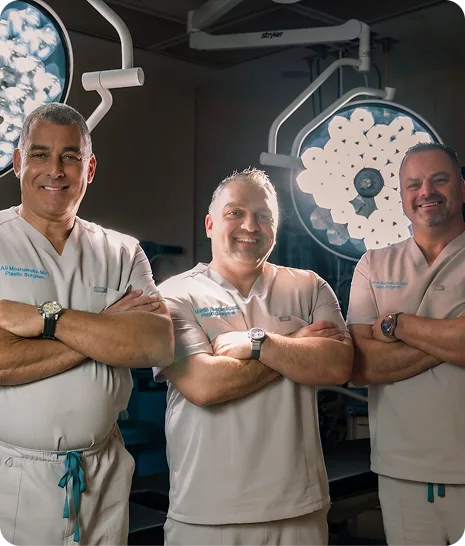
SERVING YOU WITH INTEGRITY
Mosharrafa Plastic Surgery has been providing a comprehensive range of plastic surgery services to men and women in the Phoenix area since 1996. Dr. Ali Mosharrafa and Dr. Tamir Mosharrafa have been practicing in the Phoenix area ever since, and are now joined by Dr. Martin Benjamin. Together, Drs. Ali Mosharrafa, Tamir Mosharrafa, and Martin Benjamin offer a comprehensive range of surgical and non-surgical aesthetic services, combining decades of experience with the latest techniques in breast, body, and facial rejuvenation.

